
Green Panchayat: Himachal’s Solar-Powered Blueprint for Sustainable Rural Development
Kangra, Himachal Pradesh | July 2026
As the world grapples with climate change, rising carbon emissions and growing dependence on conventional energy, Himachal Pradesh is charting a greener path through its ambitious Green Panchayat initiative. Under the leadership of Chief Minister Thakur Sukhvinder Singh Sukhu, the state is combining renewable energy with rural development, creating a model that promotes environmental sustainability, local economic growth and social welfare.
At the heart of the initiative is the installation of 500-kilowatt ground-mounted solar power plants in 100 gram panchayats across the state. Each project, costing around ₹2 crore, is expected to generate nearly 800,000 units of clean electricity annually, significantly boosting Himachal’s renewable energy capacity while reducing carbon emissions.
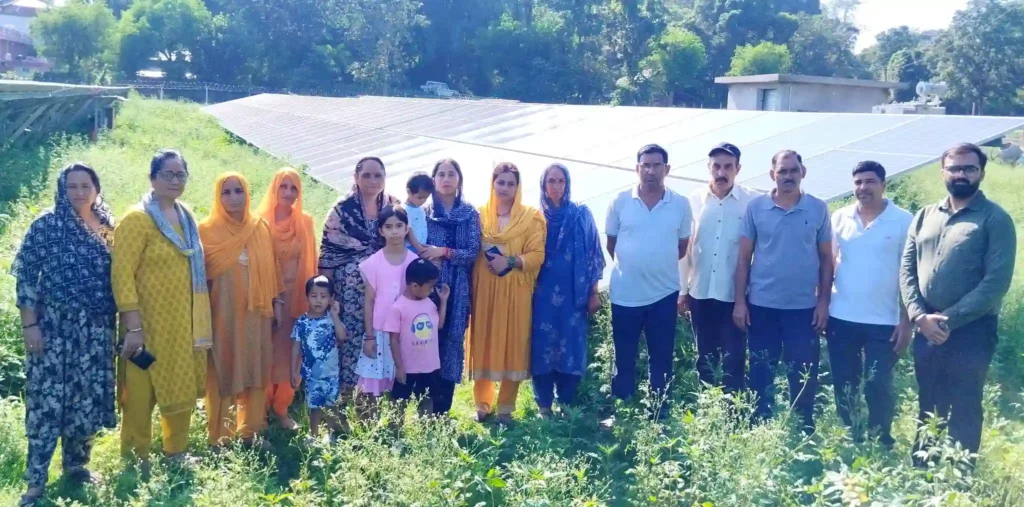
One of the flagship projects has been established at Gubbar (Pargod) village near Lanj in Kangra district. The solar plant is in the final stage of commissioning and is expected to begin power generation shortly. Developed with World Bank support, the project demonstrates how renewable energy can become a catalyst for sustainable rural transformation.
What makes the Green Panchayat scheme unique is its innovative revenue-sharing model. Twenty percent of the revenue generated will go to the Himachal Pradesh Government, while 30 percent will support HIMURJA for the operation, maintenance and management of the project. The remaining 50 percent will directly benefit local communities. Half of this share will fund village development works such as roads, drinking water, sanitation and public infrastructure, while the other half will provide financial assistance to orphaned children and widowed women within the panchayat.
The projects are being developed exclusively on government land, eliminating the need for private land acquisition and ensuring smoother implementation. Beyond clean energy generation, the initiative provides gram panchayats with a steady source of income, enabling them to finance development projects independently while strengthening social security for vulnerable groups.
According to HIMURJA Project Officer Arun Bhardwaj, the Gubbar solar plant occupies nearly 20 kanals of land and is expected to generate about 800,000 units of electricity every year. The electricity will be sold to the Himachal Pradesh State Electricity Board under an agreement, generating regular revenue. The panchayat is expected to receive nearly ₹1 lakh every month, creating a sustainable financial resource for local development. Similar projects are planned across Himachal, with 15 to 20 proposed in Kangra district alone.
Deputy Commissioner Hemraj Bairwa described the initiative as a milestone in translating the state’s green energy vision into reality. He said the project transforms previously unused land into a productive renewable energy asset, increasing clean power generation while creating a long-term income stream for rural communities.
The Green Panchayat initiative showcases how renewable energy can extend beyond electricity production to become a powerful instrument for inclusive development. By integrating environmental conservation, financial sustainability and social welfare, Himachal Pradesh is setting an example of how clean energy can drive prosperity at the grassroots level while building resilient and self-reliant rural communities.
Samagra Sikhsha