
Training on Climate Change Hazards and Disaster Risk Reduction Concludes at Naun
April 28, 2026
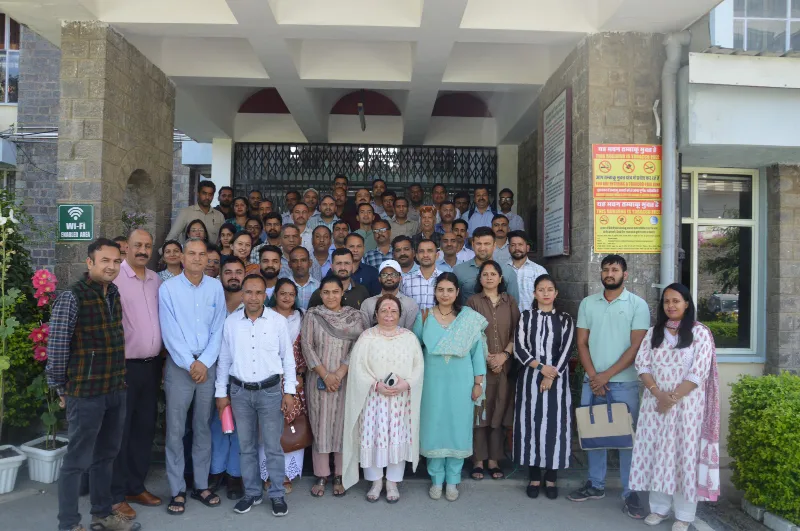
A three-day training programme on ‘Climate Change Induced Hazards and Disaster Risk Reduction Strategies’ recently concluded at Dr YS Parmar University of Horticulture and Forestry, Nauni. The programme was organized by the Department of Environmental Science of the university with the objective of educating participants from multiple government organizations and concerned authorities, while enhancing their knowledge and capacity in climate resilience and disaster risk management.
The training programme was conducted in seven sessions, featuring fourteen expert lectures delivered by renowned scholars and resource persons from premier institutes across India. A total of 51 participants actively attended the programme, engaging in meaningful discussions with scholars and policymakers and sharing the challenges they face in mitigating and managing environmental and climate-related issues.
During the inaugural session, Professor Satish Kumar Bhardwaj, Head of the Department of Environmental Sciences, highlighted the major climate-related hazards affecting Himachal Pradesh and discussed suitable mitigation measures. Vijay Singh, District Disaster Management Officer, Solan, elaborated on the role of the District Disaster Management Authority and explained relevant acts and legislations to the participants. Dr. Pratima Vaidya shared insights into climate-resilient drought mitigation practices for mountain ecosystems.
Dr. Mahesh Sharma from the Department of Civil Engineering, Himachal Pradesh University, discussed climate-resilient infrastructure for sustainable mountain ecosystems and strategies for disaster risk reduction through landslide and slope failure mitigation. Dr. Ghanshyam Agrawal spoke on the integrated design of drainage systems for soil conservation in hilly regions. Dr. Aadya Dixit, Fellow, Indian Institute of Advanced Studies, described sustainable development pathways for disaster risk reduction.
Dr. Gopal Krishan, Scientist at the National Institute of Hydrology, delivered a lecture on climate-resilient management of mountain springs. Prof. KK Raina, former Head of the Department of Business Management, UHF Nauni, emphasized the importance of behavioural changes in building climate-resilient communities. Dr. Purnima Mehta informed participants about weather forecasting and its critical role in disaster management. The concept of GRIHA, a sustainable building code framework, was also discussed during the training programme.
The valedictory function was graced by Dr. CL Thakur, Dean, College of Forestry, as the chief guest. Dr. Thakur urged them to implement the knowledge and takeaways from the training in their respective fields to contribute towards building a climate-resilient society.
Samagra Sikhsha