
Rajiv Gandhi Van Samvardhan Yojana: Himachal’s Green Mission Empowers Communities
Kangra, July 11
Himachal Pradesh is transforming afforestation into a community-driven movement through the Rajiv Gandhi Van Samvardhan Yojana, a flagship initiative that combines environmental conservation with rural livelihoods. The scheme aims to increase the state’s forest cover to 30 percent by 2030 while creating sustainable employment opportunities through active public participation.
Launched under the leadership of Chief Minister Thakur Sukhvinder Singh Sukhu, the initiative goes beyond tree plantation by involving Mahila Mandals, Yuvak Mandals, Self-Help Groups (SHGs), and other registered community organisations in restoring degraded forest land. These groups are entrusted not only with planting saplings but also with protecting and maintaining them, fostering long-term ownership of forest resources.
Under the scheme, each eligible community organisation can receive up to five hectares of barren or degraded forest land based on ecological suitability. The Forest Department provides quality saplings through its nurseries and regularly monitors plantation sites to ensure successful implementation.
To encourage participation, the government offers financial assistance of ₹1.20 lakh per hectare for plantation and maintenance. An additional incentive of ₹1.20 lakh per hectare is provided based on the verified survival rate of saplings, generating direct and indirect employment for thousands of rural residents.
The initiative also contributes to carbon sequestration, water conservation, soil protection, and biodiversity enhancement by promoting the plantation of native species. It is expected to strengthen climate resilience while ensuring sustainable management of natural resources through community stewardship.
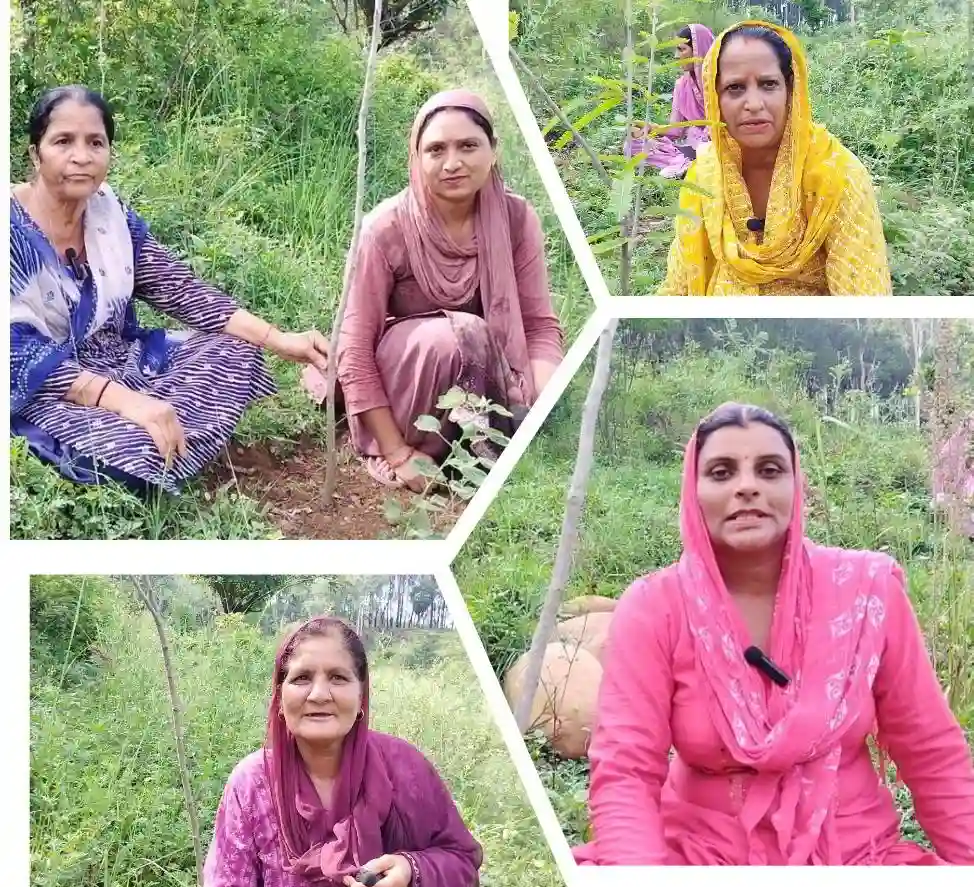
One inspiring example comes from Ghurkari near Dharamshala, where the Om Namo Narayan Self-Help Group converted nearly two hectares of lantana-infested land into a thriving green zone. Led by group president Asha Devi, members Anita Kumari, Aruna Kumari, Pushpa Devi, Anita Devi, Shanti Devi, and Premlata removed invasive shrubs, fenced the area, and planted over 1,600 indigenous saplings. Using traditional methods to protect the plantation from wild animals, the group has successfully ensured the healthy survival of the saplings.
Divisional Forest Officer Amit Kumar said the scheme is one of the state’s most ambitious community forestry initiatives. He noted that nearly 22,000 saplings were planted across 28 hectares in the Dharamshala Forest Division last year with active participation from women’s groups, youth clubs, and SHGs.
He added that the scheme rewards successful maintenance rather than plantation alone. Community organisations demonstrating high sapling survival rates are eligible for incentive awards of up to ₹1 lakh.
This year, the Dharamshala Forest Division plans to expand the programme by involving 17 Mahila Mandals, six Yuvak Mandals, and five Self-Help Groups across the Dharamshala, Shahpur, Nagrota Bagwan, and Kangra Assembly constituencies. The plantation drive will prioritise medicinal and fruit-bearing native species such as Harad, Baheda, and Amla to strengthen biodiversity while supporting local livelihoods.
As Himachal Pradesh works towards its 2030 forest cover target, the Rajiv Gandhi Van Samvardhan Yojana is emerging as a successful model of balancing ecological restoration with community empowerment, demonstrating how conservation can also become a pathway to economic prosperity.
Samagra Sikhsha