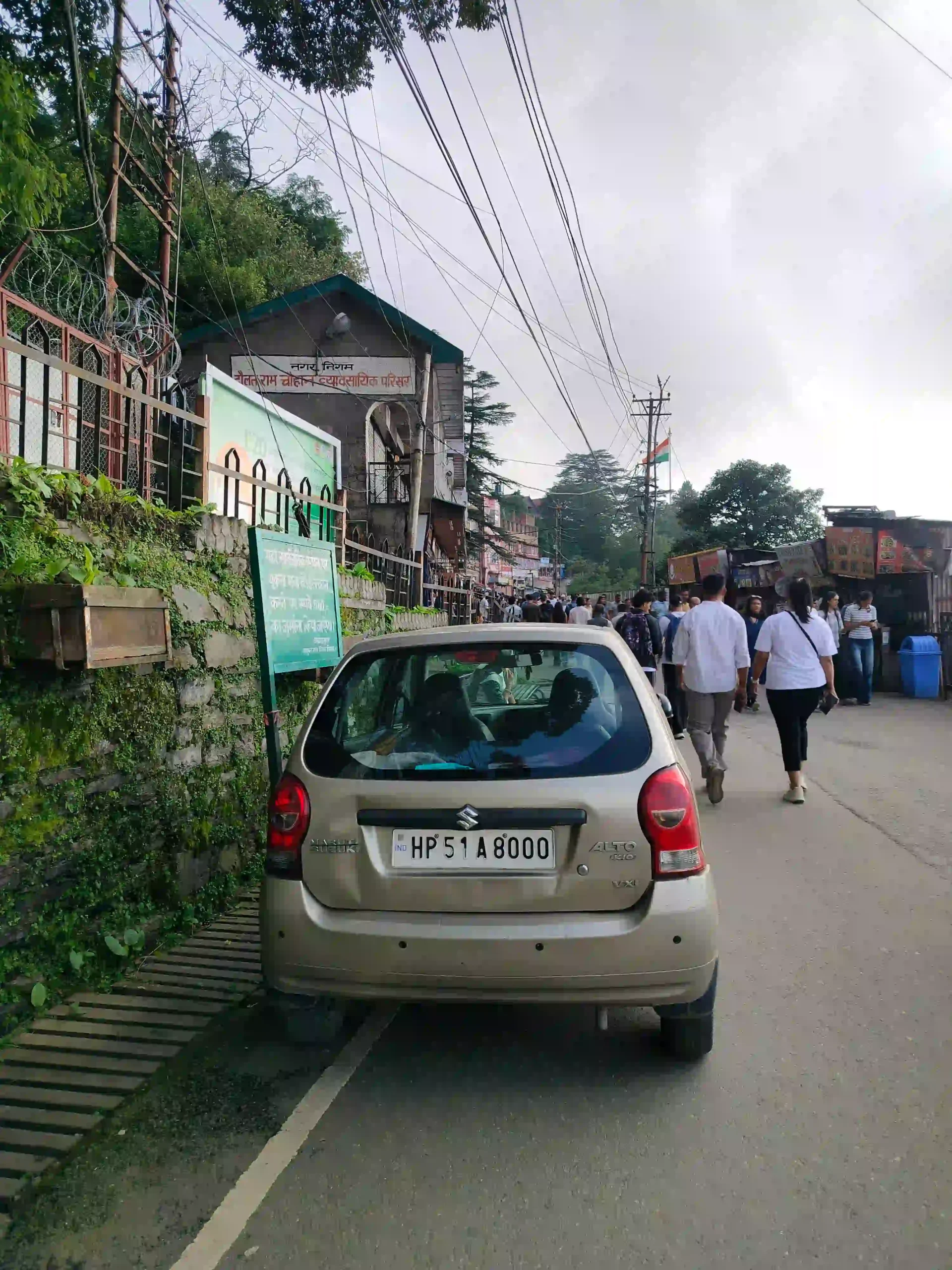

Editorial: Shimla’s Heritage Streets – Rules for Some, Exceptions for Others
Shimla cannot claim to protect its heritage while casual vehicular access dilutes the very character of its historic pedestrian spaces
Shimla, Aug. 23 Ritanjali Hastir
The audacity would almost be amusing if it were not so deeply troubling.
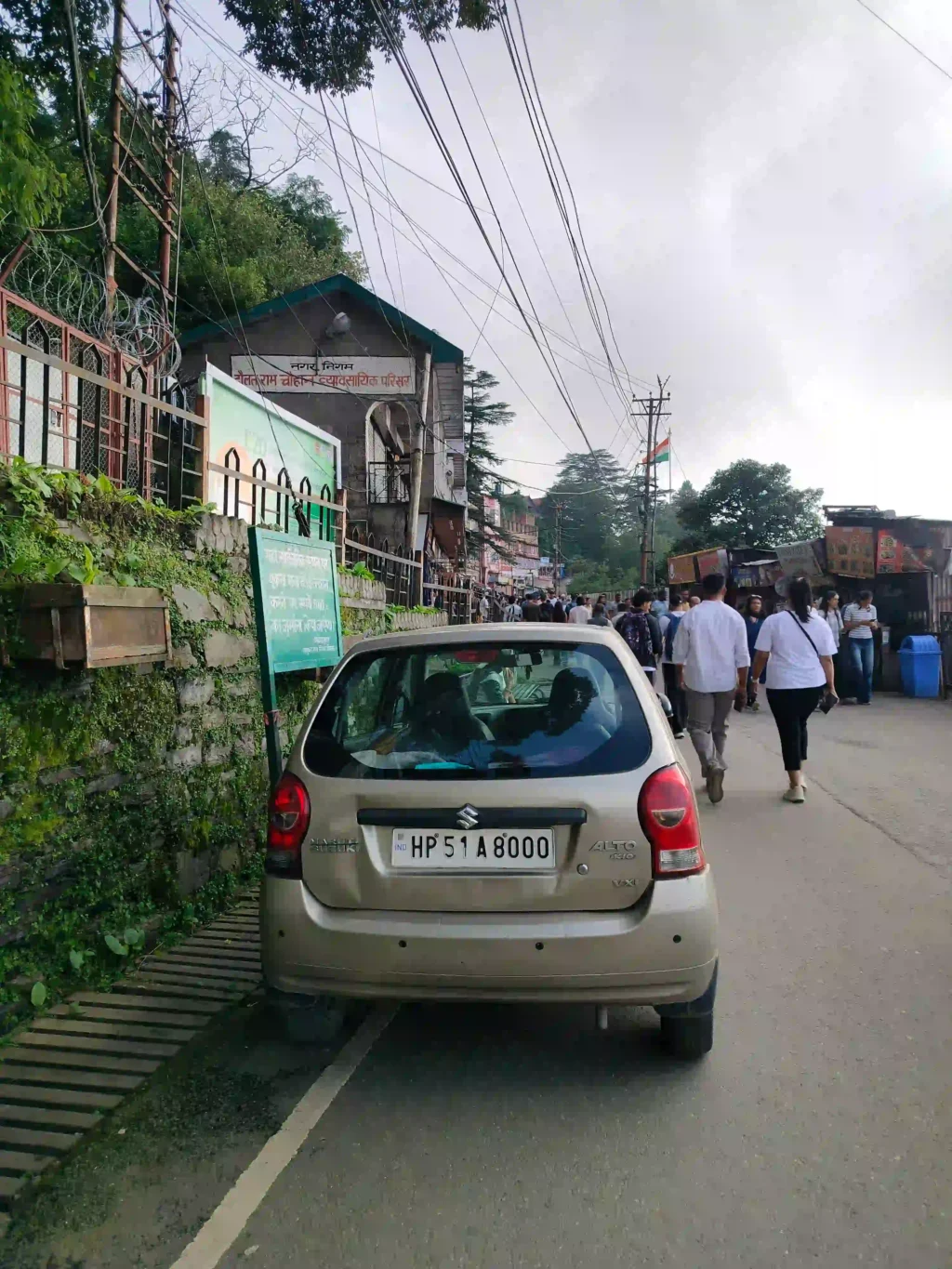
Yesterday, a private car was found parked on Seal Road near Lakkar Bazar, right beside the police check post near Hotel Diplomat. This is a stretch meant to prioritise pedestrians, yet a private vehicle was occupying the very space that was intended to remain free of traffic.
Identifying the vehicle’s owner should not be difficult. A simple registration check can establish the registered owner within moments. The bigger question is, how did the car get there at all?
The route taken by the car is equally puzzling. One approach requires passing No Entry signs and police barricades near Auckland House; the other goes past the Sanjauli police station. How did the vehicle get through either route without being stopped?
Yet the vehicle somehow made its way through one of these routes without police stopping it.
Even more concerning is what happened after police spotted it. Instead of being removed immediately, the police reportedly waited nearly half an hour for the owner to return before issuing a ₹1,500 challan. Why was there a delay? And, more importantly, was that patience extended because of who the owner was?
For an ordinary citizen, a violation of a restricted zone is unlikely to come with a 30-minute window to return and collect the vehicle. A ₹1,500 fine, meanwhile, hardly serves as a deterrent if entering a prohibited area is treated as little more than the price of convenient parking.
Shimla’s Lakkar Bazaar and its connecting Seal Roads were created as pedestrian spaces and remain an important part of the city’s heritage character. But every such exception undermines that idea. A road meant for walkers gradually begins to look like a cart road—vehicles enter despite restrictions, and enforcement becomes negotiable.
The issue is therefore bigger than one car or one challan. Who owns the vehicle should not determine how the law is enforced.
If these roads are genuinely meant to remain pedestrian zones, the rule must be simple: no private vehicles, no exceptions. Otherwise, Shimla risks losing not just a traffic restriction, but a defining part of its heritage.
Samagra Sikhsha