
Gaiety Theatre Festival: One Standout Performance Amid Uneven Direction and Acting
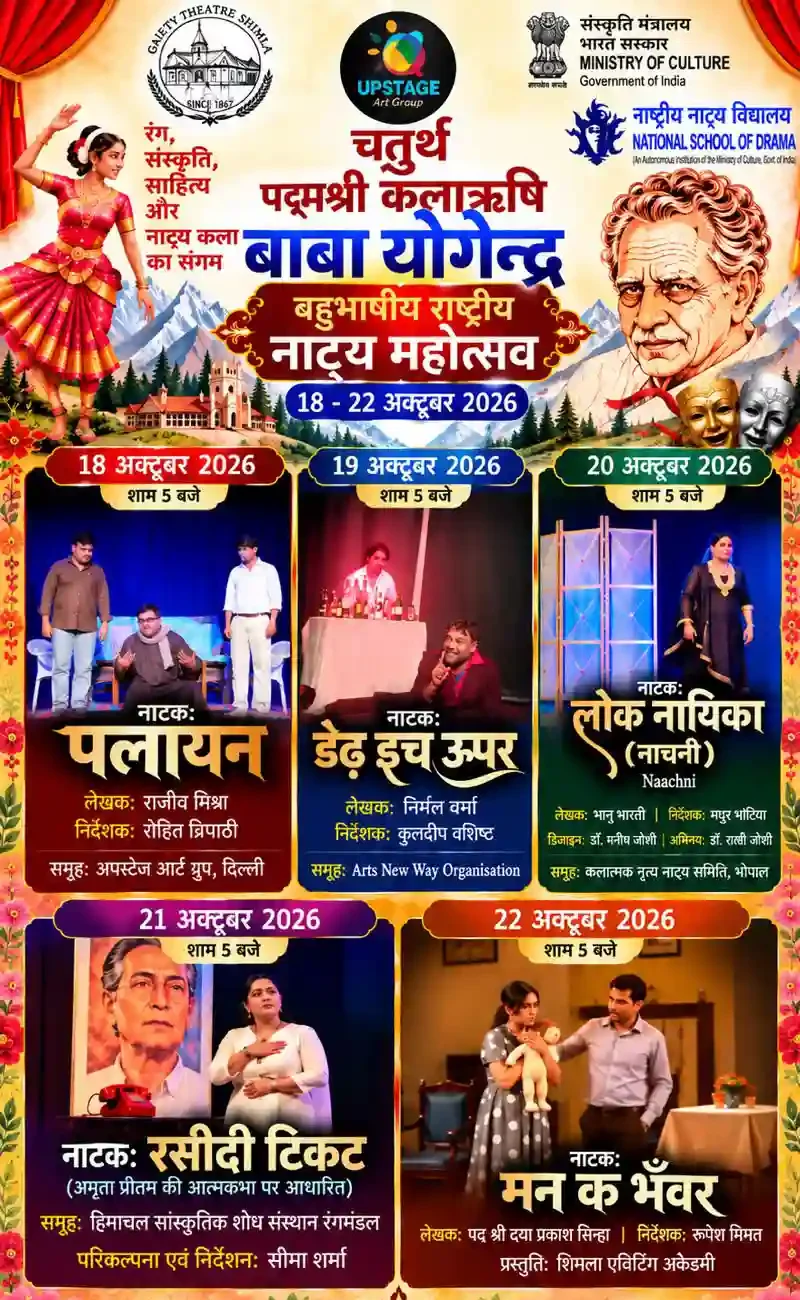
The five-day theatre festival held at Shimla’s historic Gaiety Theatre from October 18 to 22, 2026, presented five productions dealing with displacement, loneliness, marginalisation, identity and psychological conflict. While the themes offered considerable scope for meaningful theatre, the execution was uneven. Some productions failed to translate their literary and emotional potential into convincing stage experiences, while Loknayika (Nachani) emerged as the clear standout.
1. Palayan: A Powerful Subject, an Average Execution
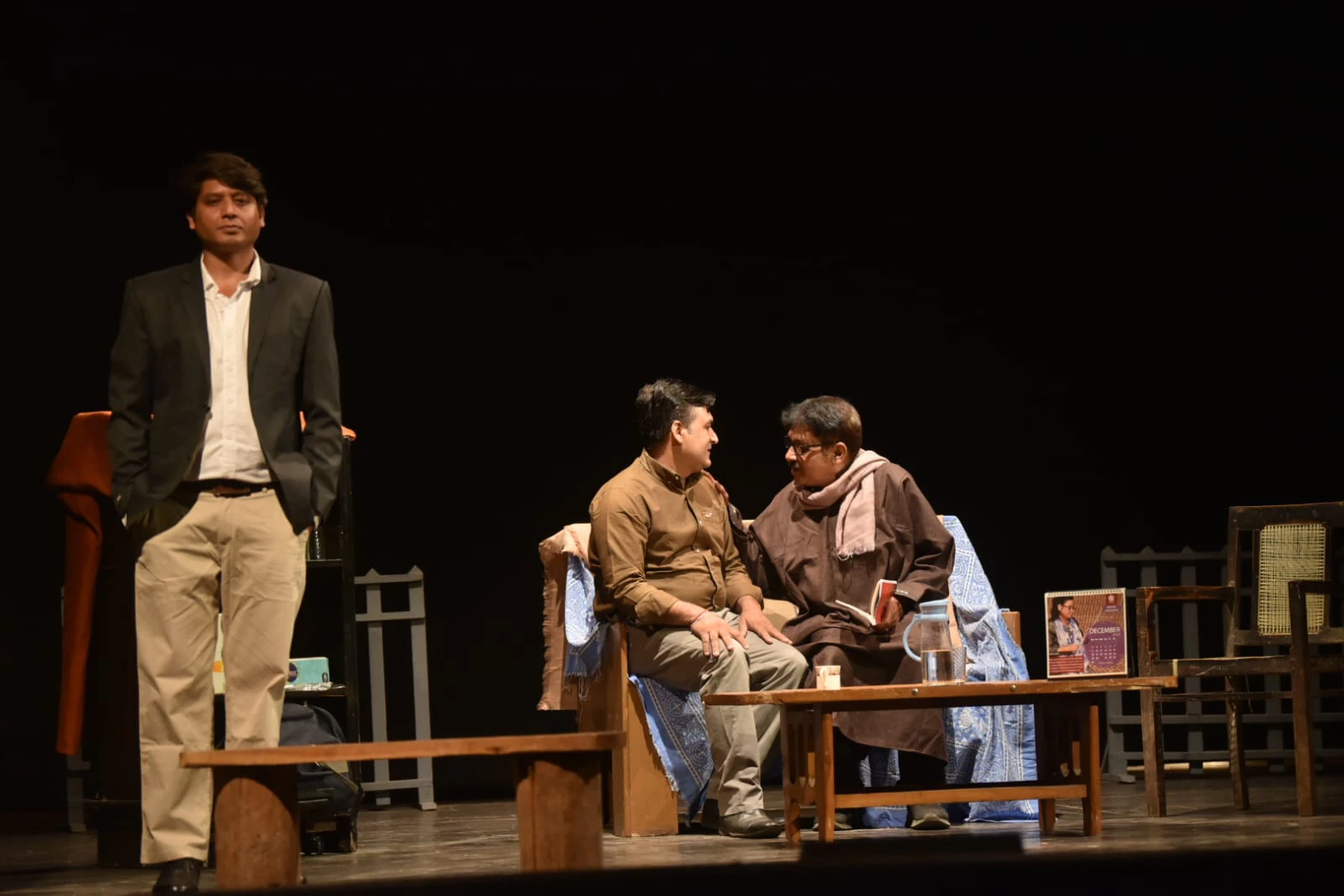
Directed by Rohit Tripathi, Palayan, written by Rajiv Mishra, addresses the painful displacement of Kashmiri Pandits. The subject is inherently moving and provides ample scope for emotional depth. However, the production remained largely average in its overall theatrical impact. The actor portraying the father struggled with diction and vocal modulation, with the delivery often sounding forced and the native accent becoming more prominent than the character’s emotional truth. At times, the performance evoked memories of Mithun Chakraborty and Anupam Kher in The Kashmir Files, rather than establishing a distinct and convincing character of its own. The play’s serious subject deserved a more restrained and nuanced treatment.
2. Dedh Inch Upar: Confused Production with Misjudged Dance-Bar Sequence
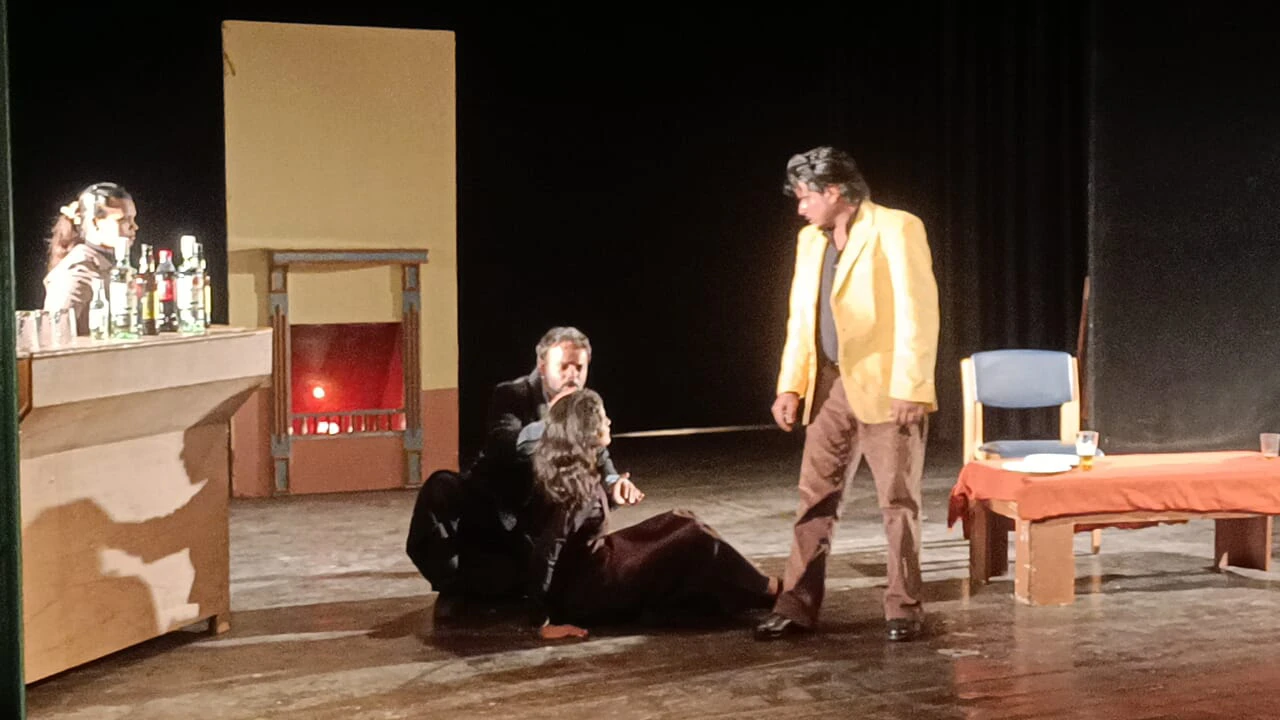
Based on Nirmal Verma’s story and directed by Kuldeep Vashishth, Dedh Inch Upar revolves around an elderly man conversing with a stranger in a bar, gradually revealing memories, loneliness and reflections on his relationship with his wife. The premise offers considerable psychological depth, but the production weakens its own impact through unnecessary additions that dilute the original work.
The most glaring problem is the setting. Although the location is supposed to be a pub or bar, the stage fails to establish a convincing bar atmosphere and at times resembles a dance bar instead. The dance sequence feels gratuitous, contributing little to the narrative or the protagonist’s psychological journey. It also lacks the sensuality, charisma and stage presence that might have justified its inclusion in the first place. Instead of enriching the scene, it becomes a distracting insertion.
The character dynamics are equally confusing. At one point, the protagonist refers to the woman as “my son”, leaving the nature of their relationship unclear and raising questions about the director’s understanding of the dramatic context. The fireplace, too, appears purposeless, adding little to the setting or the action. These are not merely minor technical flaws; they point to a lack of clarity in directorial choices. A play built around silence, memory and human loneliness requires precision and restraint, yet Dedh Inch Upar repeatedly undermines its own strengths through unnecessary embellishments and an inadequately conceived stage environment.
3. Loknayika (Nachani): Festival’s Most Convincing Production
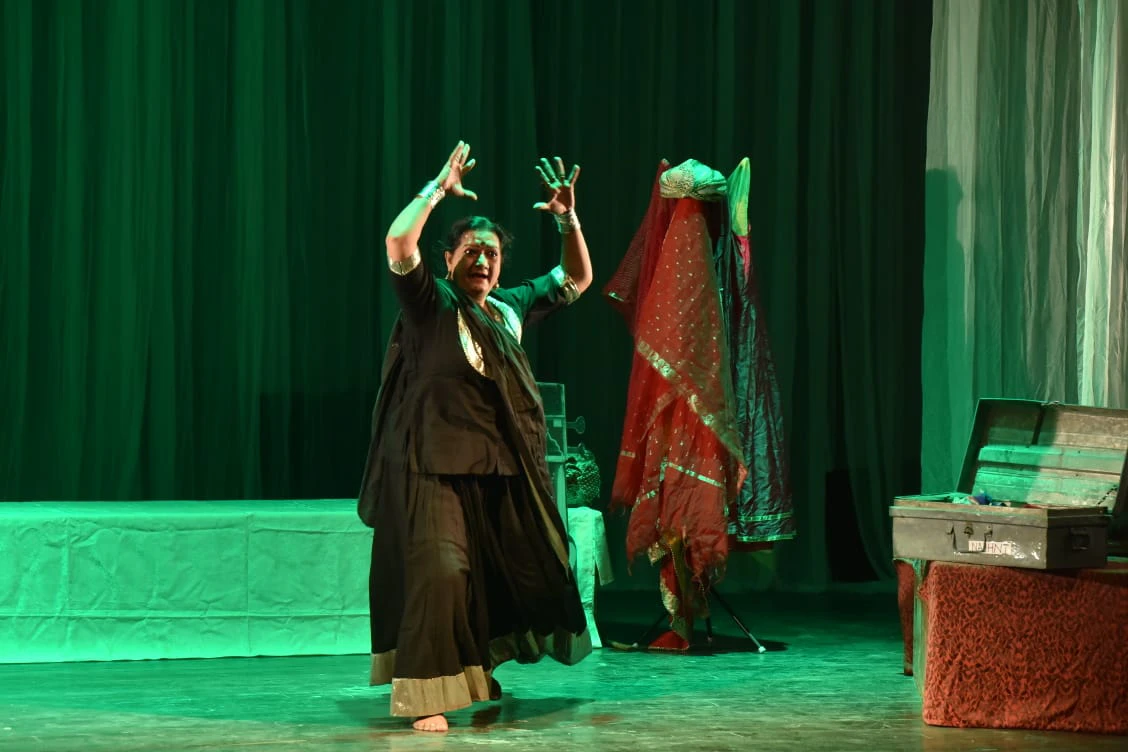
Directed by Madhur Bhatia, with a solo performance by Rakhi Joshi, Loknayika (Nachani), written by Bhanu Bharti, emerged as the strongest production of the festival. Its portrayal of a marginalised woman who uses dance as a means of livelihood, identity and self-respect was both emotionally engaging and theatrically effective.
Rakhi Joshi’s performance stood out for its command of movement, expressive ability and integration of dance with the character’s inner world. Unlike the largely decorative dance sequence in Dedh Inch Upar, dance here was integral to the story and the protagonist’s identity. The performance demonstrated how movement can become a powerful language of resistance and dignity when it is rooted in the narrative. The set supported the production rather than competing with it. The performance deserved the standing ovation it received and set a benchmark for the other productions in the festival.
4. Raseedi Ticket: Flat Portrayal of Distinctive Literary Personality
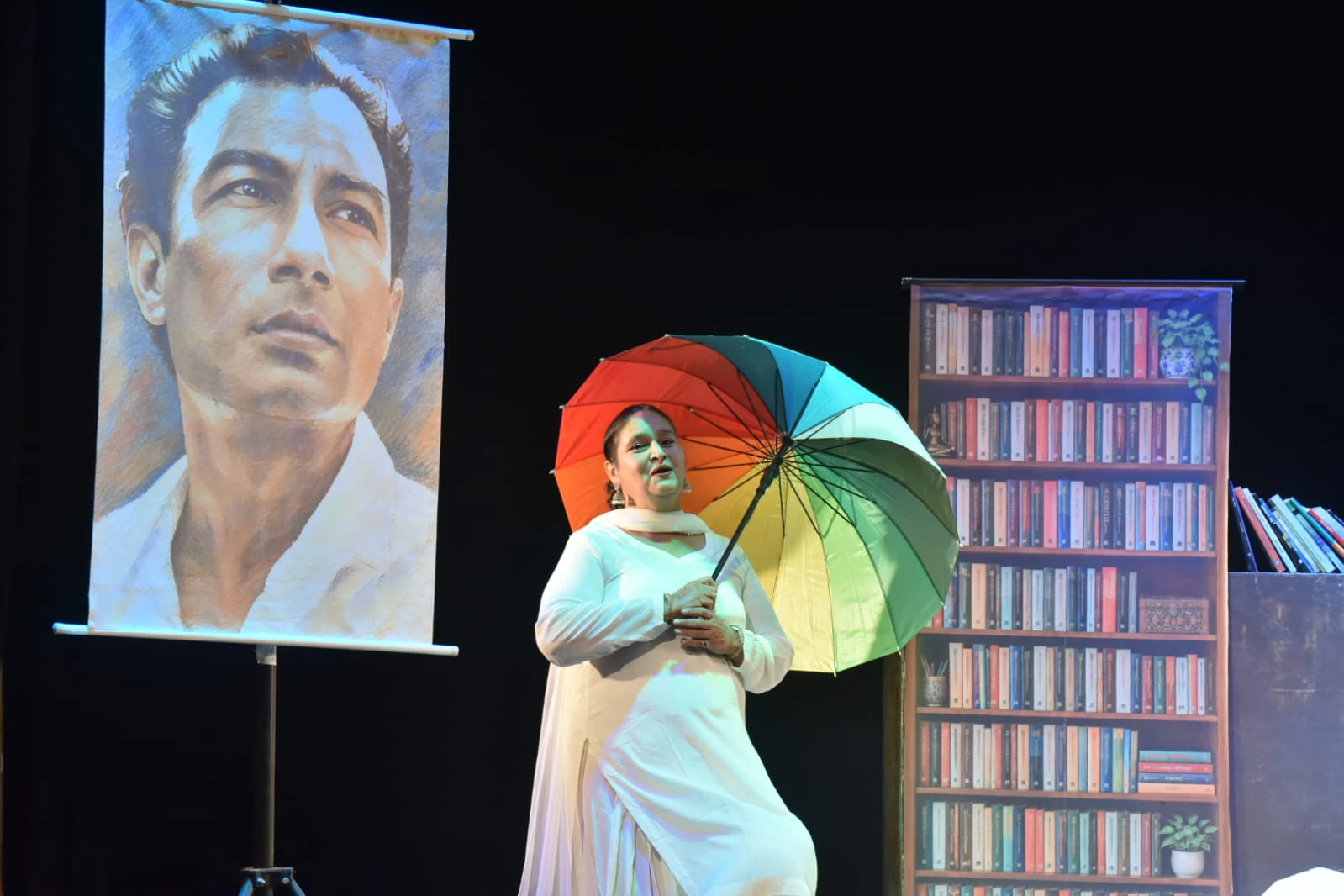
Conceived, directed and performed by Seema Sharma, Raseedi Ticket draws on the autobiography of Amrita Pritam. However, the portrayal failed to convincingly capture the literary icon’s personality, intellect and distinctive presence. Amrita Pritam was a well-read, articulate and intellectually accomplished woman, whose command of language was integral to her identity. Unfortunately, the actor’s diction failed to do justice to this defining aspect of her personality. The dialogue delivery lacked the fluency, precision and linguistic sophistication required to make the portrayal credible.
The characterisation also felt superficial, lacking the emotional complexity and individuality needed to bring such a distinctive figure alive on stage. The styling, particularly the prominent jhumka earrings, became a distraction rather than contributing meaningfully to the portrayal. The song and music likewise failed to strengthen the emotional texture of the production.
Most importantly, the performance remained flat, with little variation in expression, vocal modulation or emotional intensity. A personality as layered as Amrita Pritam demands shifts in mood, vulnerability, defiance and introspection. Without these variations—and with diction that failed to reflect her literary stature—the portrayal felt monotonous and struggled to establish a convincing connection with the audience. The production had a rich literary source at its disposal but failed to realise its dramatic possibilities.
5. Man Ke Bhanwar: A Stronger Grip on Psychological Conflict
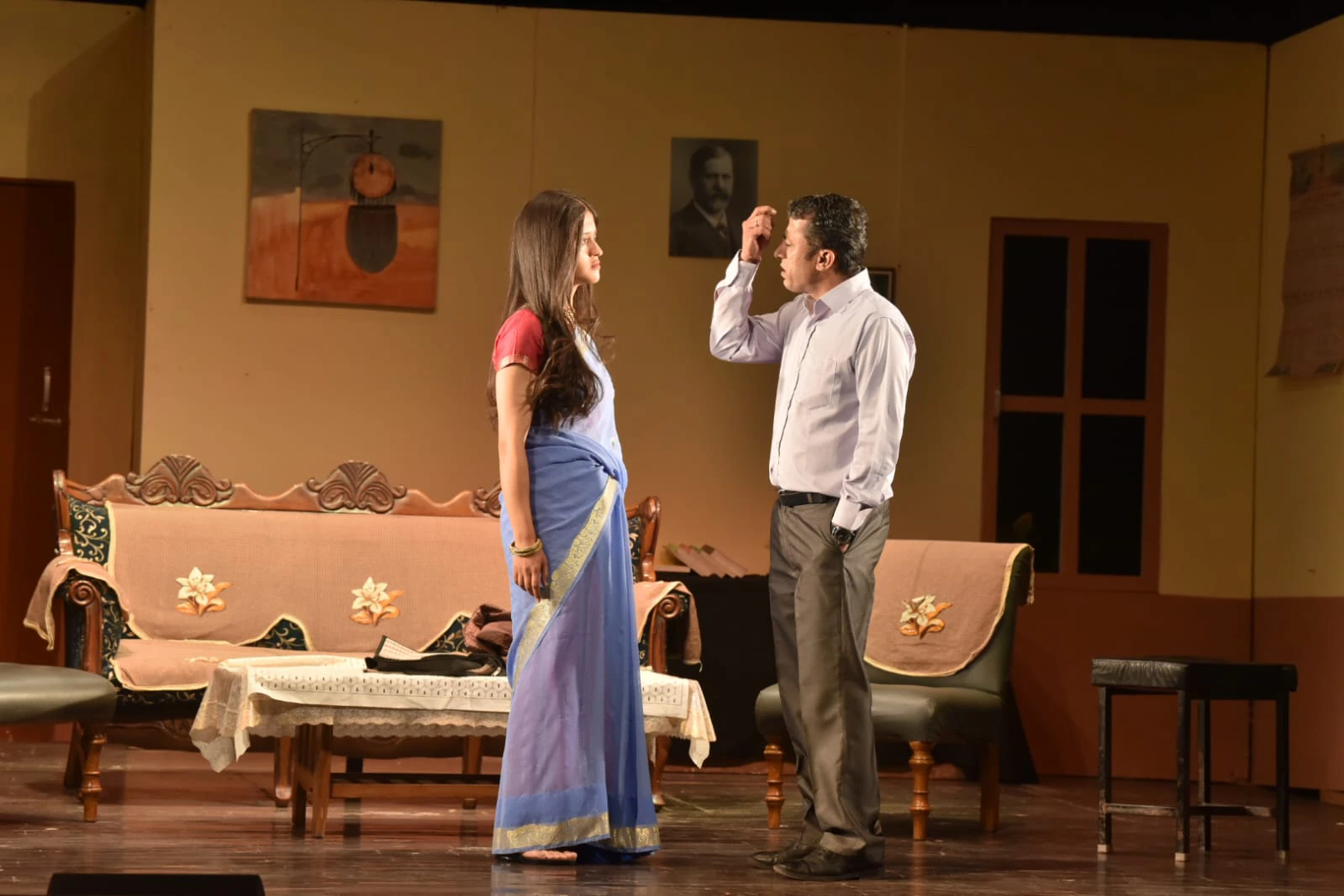
Written by Padma Shri Daya Prakash Sinha and directed by Rupesh Bheemta, Man Ke Bhanwar explored psychological turmoil, relationships and the consequences of personal decisions. Compared with several other productions, it demonstrated greater control over its central conflict. The lead actor effectively conveyed the protagonist’s dilemma through facial expressions and emotional responses, making the internal struggle accessible to the audience.
Although the production was not without scope for further refinement, it maintained its focus and delivered a satisfying theatrical experience. The lead performance, in particular, gave the play its strength and helped it conclude the festival on a relatively strong note.
The festival demonstrated that a compelling subject or a celebrated literary source alone cannot guarantee successful theatre. Directorial clarity, credible characterisation, precise diction, purposeful stage design and disciplined performances are equally essential. Dedh Inch Upar suffered from confused staging and an unnecessary dance-bar sequence; Raseedi Ticket was weakened by inadequate diction, flat expression and an unconvincing portrayal; and Palayan, despite its emotionally charged subject, did not consistently rise above an average execution.
In contrast, Loknayika (Nachani) succeeded because its performance elements served the story, while Man Ke Bhanwar maintained a stronger grip on psychological conflict. On balance, Loknayika (Nachani) was the festival’s most accomplished production, followed by Man Ke Bhanwar. The remaining plays demonstrated varying degrees of unrealised potential, reminding audiences that serious themes and distinguished literary sources must be matched by equally serious theatrical craftsmanship.
Samagra Sikhsha