
Three-Day National Seminar on ‘Diversity and National Integration: Addressing Contemporary Challenges’ Inaugurated at the Indian Institute of Advanced Study
Emphasis on Understanding National Unity Beyond Political and Territorial Integrity, in the Broader Context of Social Cohesion, Equal Participation, Cultural Identity and Constitutional Values
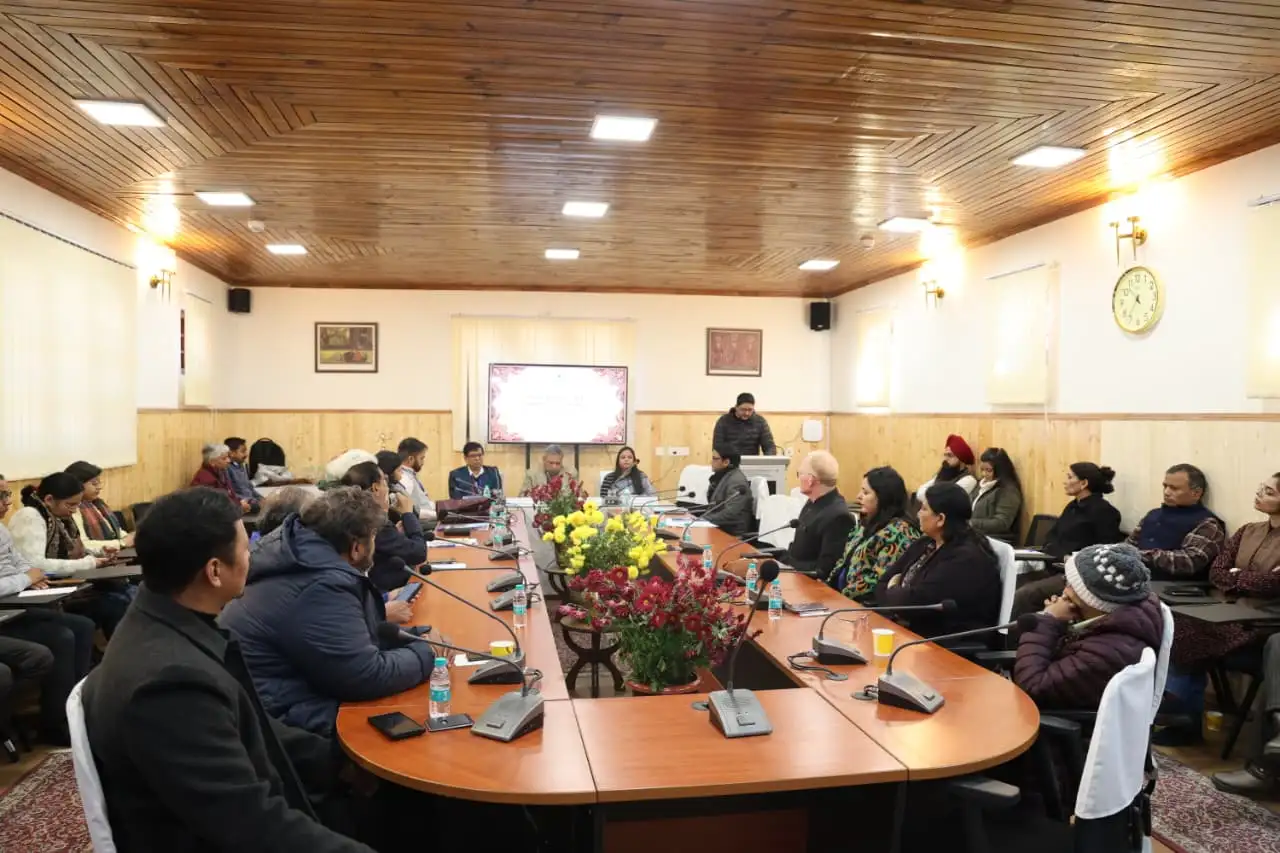
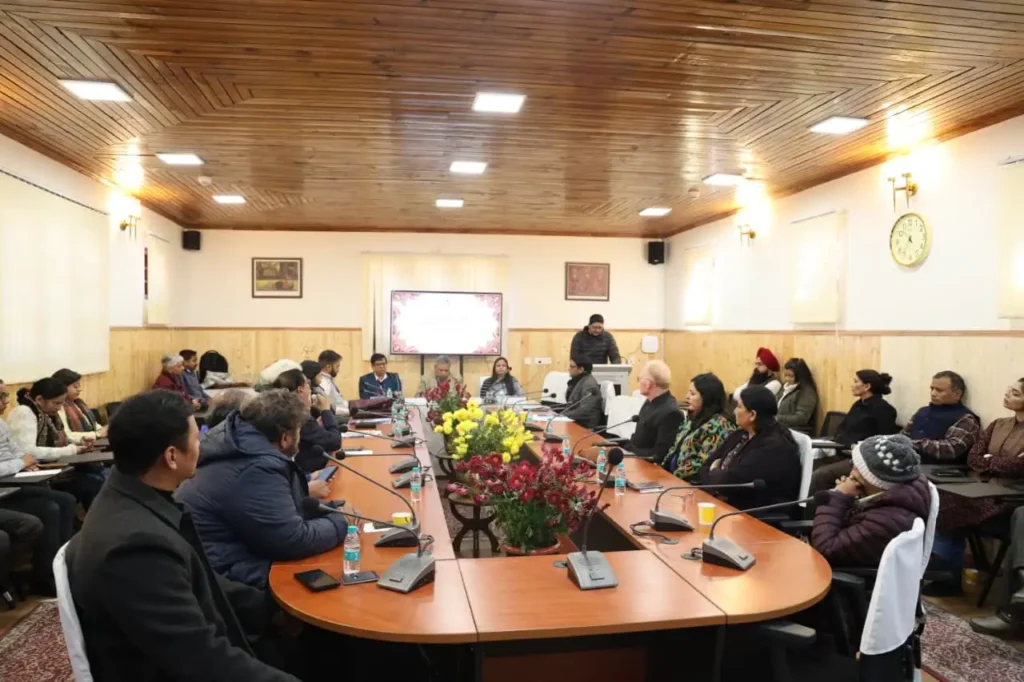
Shimla, 18 November 2026: The three-day National Seminar on ‘Diversity and National Integration: Addressing Contemporary Challenges’ commenced today at the Indian Institute of Advanced Study (IIAS), Rashtrapati Nivas, Shimla. Being held from 18 to 20 November 2026, the seminar brings together scholars, faculty members, research scholars and subject experts from various universities and academic institutions to deliberate on the concept of national integration and its contemporary challenges in the context of India’s diverse social, cultural, political and economic fabric.
The inaugural session commenced with the traditional lighting of the ceremonial lamp. Those present on the occasion included Prof. Himanshu Kumar Chaturvedi, Director, Indian Institute of Advanced Study; Dr. Suraj Kumar, Indira Gandhi National Open University (IGNOU), New Delhi, as the keynote speaker; Dr. Prarthna Agarwal Goel, Delhi School of Economics, University of Delhi, as the special speaker; Dr. Bhanu Pratap Singh, Assistant Professor, Institute of Educational and Developmental Studies (IEDS), Noida, and Convener of the seminar; and Dr. Rajeev Kumar Mishra, Librarian/Academic Resource Officer, IIAS, along with several scholars and participants.
The inaugural session began with the welcome address by Dr. Rajeev Kumar Mishra, who extended a warm welcome to the distinguished guests, scholars and participants. This was followed by an introduction to the theme by the Convener, Dr. Bhanu Pratap Singh, who outlined the academic background, objectives and broader conceptual framework of the seminar.
Delivering the keynote address, Dr. Suraj Kumar shared his perspectives on the central theme of the seminar. This was followed by the special address by Dr. Prarthna Agarwal Goel, who presented her academic perspectives on the subject before the participants.
In his presidential address, Prof. Himanshu Kumar Chaturvedi, Director, Indian Institute of Advanced Study, highlighted the broader conceptual and contemporary significance of national integration. He emphasised the need to understand the subject not merely in terms of political unity and territorial integrity, but also in relation to India’s social, cultural and intellectual diversity. His address underscored the central objective of the seminar: to encourage academic dialogue that strengthens national unity, social cohesion and a shared national consciousness while respecting diversity.
The inaugural session was moderated by Dr. Akhilesh Pathak, Sales and Public Relations Officer, IIAS. He conducted the proceedings and introduced the speakers and distinguished guests. He also proposed the formal vote of thanks on behalf of the Institute at the conclusion of the session. The inaugural session concluded with the National Song and the National Anthem.
The central objective of this three-day seminar is to examine the social, economic, cultural and constitutional dimensions of national integration, moving beyond the conventional understanding of the concept in terms of political unity and territorial integrity. The seminar is based on the premise that, in a multilingual, multicultural and diverse country like India, the true meaning of national integration also lies in strengthening equal participation, mutual respect and a shared sense of national identity among different communities, regions and social groups.
The seminar’s theme places particular emphasis on the understanding that diversity and unity are not mutually contradictory. The challenge lies in ensuring that differences based on language, culture, region or social position do not become sources of exclusion or inequality, but instead serve as foundations for social participation and collective strength. In this context, the seminar also explores the relationship between India’s civilisational tradition of cultural synthesis, concepts such as dharma, anekāntavāda and sarva dharma sambhava, and the constitutional values of justice, liberty, equality and fraternity.
The seminar seeks to facilitate academic deliberations on several important questions confronting national integration in contemporary India. These include social and caste-based inequalities, the participation of disadvantaged communities, federalism and regional imbalances, linguistic diversity, internal migration, demographic transformation, education and human capital development, the role of public institutions, and the influence of digital platforms and media. Constitutional morality, social cohesion, cultural identity and the evolving concept of citizenship have also been identified as important areas of discussion.
On the first day, academic sessions are being organised on themes such as Political Representation and Democratic Participation, Education and Development, and Cultural Diversity and Pathways to National Integration. Research papers are being presented on subjects including the concept of the national community, caste-based exclusion and equality, social cohesion as a foundation for national unity, the relevance of Indian Knowledge Systems in education, spiritual humanism, anekāntavāda, Indian performing arts and the role of cultural diversity.
On the second day, deliberations will focus on Demography, Migration and the Evolving Nature of Citizenry; Human Capital and State Capacity; the Political Economy of Public Institutions; and Growth, Federalism and Regional Development. These sessions will examine issues such as the social impact of migration, financial assistance in higher education, skill development, social harmony, the Uniform Civil Code, and the relationship between regional inequalities and education.
On the third day, sessions will focus on Media, Technology and the Political Economy of Information, as well as future policy directions and practical approaches. Discussions will cover contemporary issues such as artificial intelligence and national sovereignty, the role of digital platforms, online hate speech, freedom of expression, social cohesion, rural political communication, digital inclusion, and questions relating to policy and governance.
The seminar aims not only to encourage dialogue among scholars from different disciplines but also to advance research-based findings, policy recommendations and opportunities for academic collaboration on issues relating to national integration. The event is also expected to promote interdisciplinary engagement among diverse fields, including history, philosophy, political science, sociology, economics, education and media studies.
The seminar at the Indian Institute of Advanced Study provides an important platform for understanding the relationship between national unity and diversity and for fostering serious academic deliberations on contemporary social and institutional challenges. It seeks to explore the broader question of how India can further strengthen equality, participation, social cohesion and a shared national purpose while preserving its pluralistic identity and cultural diversity.
Samagra Sikhsha