
Shoolini University hosts International Conference on AI and Human-Computer Interaction
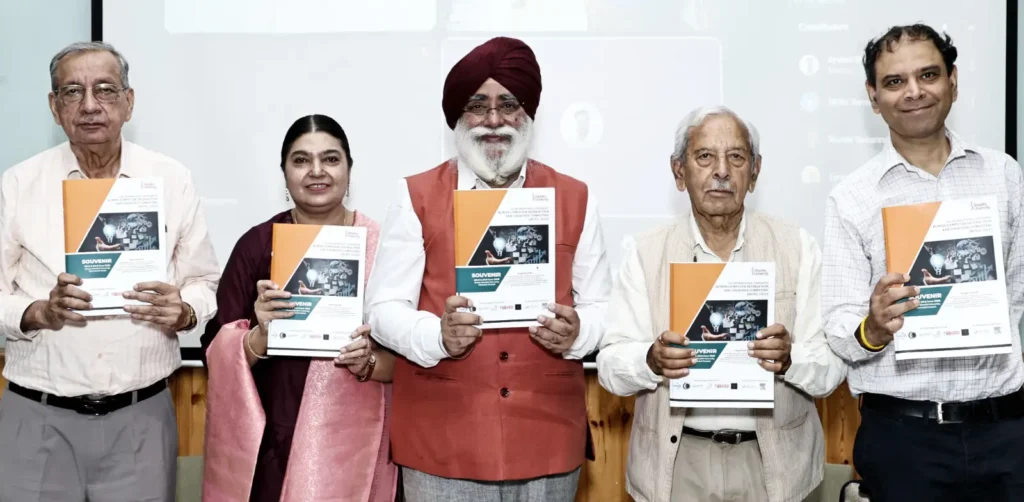
Solan, June 22
The Yogananda School of AI, Computers and Data Sciences at Shoolini University, in collaboration with IIIT Una and IIT Ropar’s Technology Innovation Hub (iHub AWaDH), organised the 2nd International Conference on Human-Computer Interaction and Cognitive Computing (HCICC-2026) on Monday.
The conference brought together academicians, researchers, industry professionals and students from India and abroad to discuss recent developments and future possibilities in Artificial Intelligence (AI), Human-Computer Interaction, Cognitive Computing, Healthcare and Software Engineering.
The programme began with a ceremonial lamp-lighting ceremony, followed by a welcome address by Prof. Virender Rihani, Dean, Faculty of Engineering and Technology. The inaugural session was attended by university leaders, invited experts and participants from various institutions.
Addressing the gathering, Prof. P. K. Khosla, Chancellor, Shoolini University, spoke about the importance of research and innovation in solving real-world problems. He encouraged students and researchers to use technology to create solutions that benefit society.
The Chief Guest of the conference Prof. H. S. Baweja, highlighted the importance of collaboration across disciplines and institutions. He said that partnerships between academia, industry and research organisations are essential for advancing knowledge and addressing complex challenges.
Prof. Ashish Khosla, President, Innovation and Technology, Shoolini University, spoke about the growing impact of Artificial Intelligence across sectors and stressed the need to develop technologies that are responsible, ethical and centred on human needs. Representatives from IIT Ropar’s iHub AWaDH shared insights into research opportunities, innovation ecosystems and emerging developments in AI.
A key feature of the conference was a series of keynote lectures by experts from leading national and international institutions. The sessions covered topics such as trustworthy AI systems, Brain-Computer Interfaces (BCI), embedded systems, AI in healthcare, virtual reality in education and storytelling, AI-assisted software engineering, and the role of AI in academic publishing.
The keynote speakers included Dr. Lynn R. Carter from Arizona State University, USA; Dr. Tapan Kumar Gandhi from IIT Delhi; Dr. Sudip Roy from IIT Roorkee; Dr. Tarun Sharma and Dr. Kapil Sharma from AIIMS Bilaspur; Dr. Varun Dutt from IIT Mandi; and Dr. Gagandeep Singh from Taylor & Francis Group.
The speakers shared their experiences and research findings, offering participants a better understanding of current developments, practical applications and future opportunities in Artificial Intelligence and related fields. The sessions also included interactive discussions, allowing participants to engage directly with the experts.
The first day of HCICC-2026 concluded with discussions centred on research, innovation and knowledge sharing, highlighting the role of collaborative efforts in shaping the future of Artificial Intelligence and Cognitive Computing.
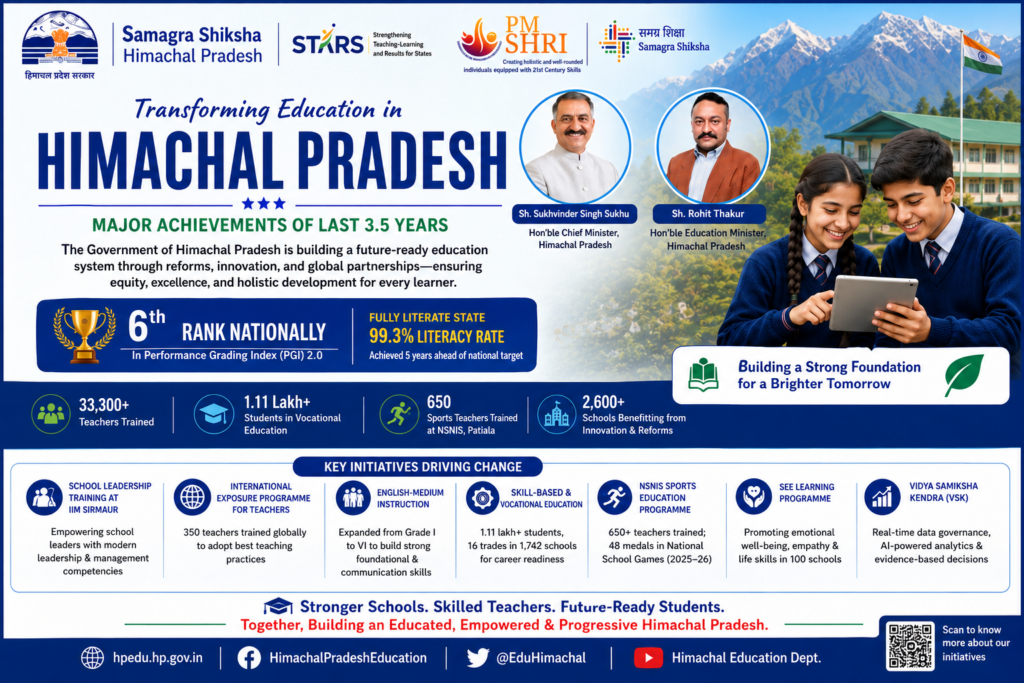
Samagra Sikhsha