
Where Mountains Meet Minds: Eternal University’s Visionary Conference Redefines India’s Industry–Academia Future
4 min read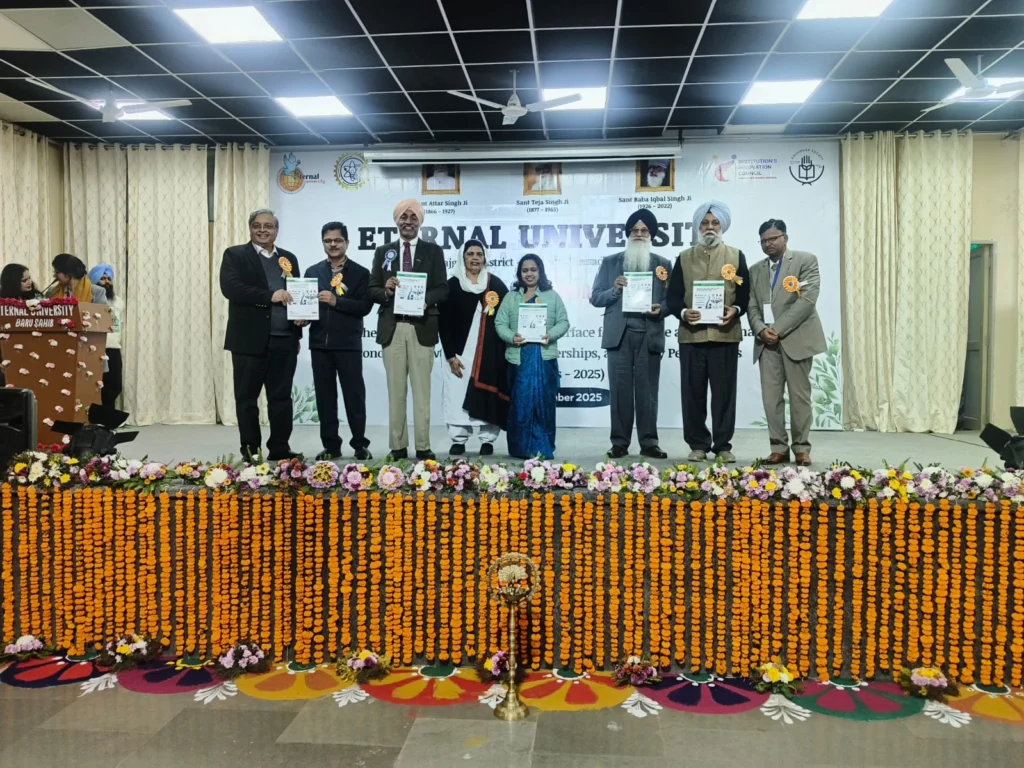
Sirmaur, Dec. 07 Ritanjali Hastir
High in the tranquil folds of Baru Sahib, where the scent of pine mingles with crisp Himalayan air, Eternal University stood transformed—not merely into a venue, but into a vibrant confluence of intellect, innovation, and intention. Against this serene backdrop, the two-day international conference on Strengthening the Industry–Academia Interface for Inclusive and Sustainable Economic Growth unfolded like a tapestry woven with ideas, insights, and aspirations for India’s future.
This was no ordinary academic gathering. It was a deliberation of purpose—where policy met pedagogy, where corporate practice met classroom realities, and where scholars and industry leaders collectively reimagined the pathways that prepare India’s youth for a rapidly transforming world.
The conference opened with a calm only the mountains can offer. A gentle Shabad recitation floated through Bhai Gurdas Hall, grounding the gathering in gratitude and humility. Vice Chancellor Prof. (Dr.) Neelam Kour, in her warm welcome, reflected on Eternal University’s commitment to an education ecosystem that thrives not only on knowledge, but on compassion, community, and responsibility.
Convener Prof. S. C. Ghosh followed, situating the conference theme within the urgent national debate on employability, innovation, and institutional preparedness. His words set the rhythm for two days of intellectual engagement that would travel far beyond the walls of the university.
The keynote sessions created early momentum. Former Vice Chancellor Dr. Jaswinder Singh urged institutions to move past traditional silos and adopt adaptive, value-rich frameworks. PRADAN CEO Saroj Mahapatra delivered a powerful reflection on how rural livelihoods can—and must—be integrated into emerging economic models if India hopes to achieve equitable development.
Madam Chandrima Chatterjee of CITI provided a panoramic view of the textile sector’s transformation, bringing into focus the rising importance of new-age skill ecosystems. Joining virtually, ICAI President Charanjot Singh Nanda highlighted the evolving expectations from finance professionals in a shifting economy, while innovators like Vivek Verma and senior administrator Charanjit Singh brought technological, policy-driven, and governance-oriented perspectives into the conversation.
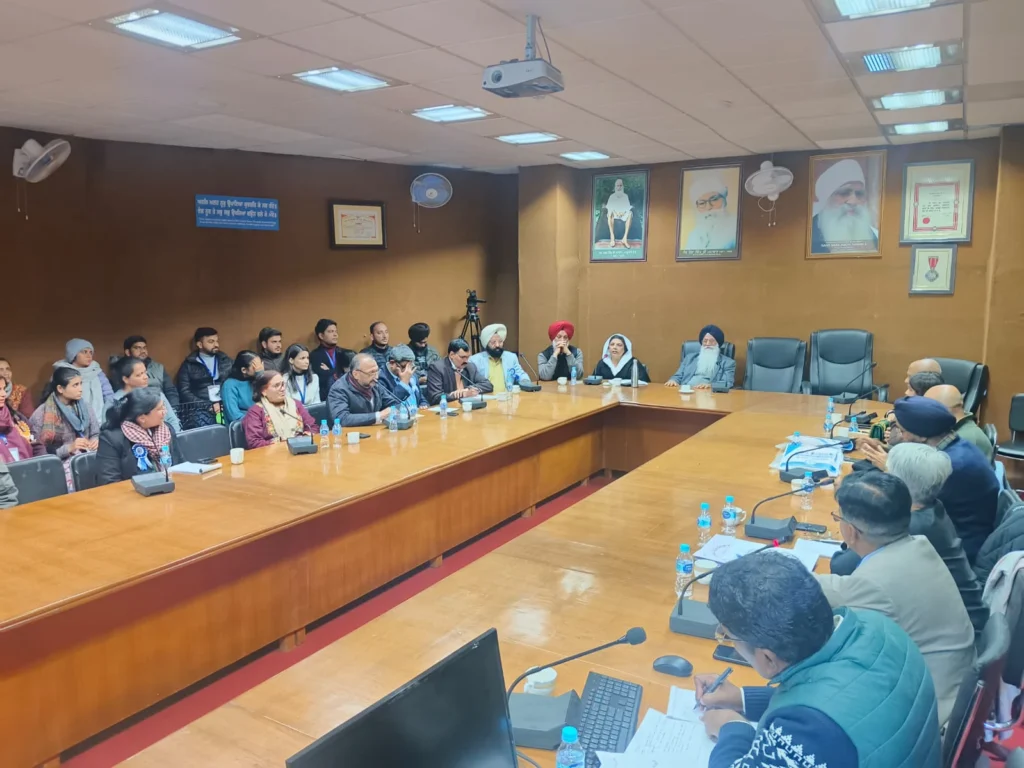
What followed were parallel sessions that buzzed with curiosity and candour. The discussions on the widening skill gap, led by voices such as Dr. Chetna Sabharwal and Dr. Manjeet Singh, painted a sobering picture of India’s employability challenge. Workforce futurist Hitesh Gulati emphasised the need for agile human capital strategies, while incubator leader Azam Ali Khan explored how universities can energise entrepreneurial ecosystems rather than merely observe them.
Turning towards the classroom, scholars like Prof. Srishti Gupta and Ms. Shreelata Krishnan drew attention to the question every educator now faces: How do we translate knowledge into meaningful solutions? NEP 2020 became a recurring thread, illuminated by perspectives from Dr. Simranjit Singh, Prof. Gurpreet Bhatia, and Dr. Punita Duhan.
Meanwhile, research and innovation found champions in Dr. Shweta Agarwal, who spoke passionately about rural innovation, and Ruchi Singla, who demystified the world of intellectual property from a socio-economic lens. The future felt closer and clearer as geospatial expert Arvind Varshney mapped smart cities as living laboratories of interdisciplinary research.
In another hall, conversations shifted to institutional structures. Prof. Rekha Gupta articulated how AI, EdTech, and Big Data are reshaping the very foundations of academic collaboration. Anirban Banerjee spoke of knowledge management as both a philosophy and a practice, essential for resilience in learning ecosystems. Former SIDBI CGM Ramesh Dharma widened the scope by describing how enabling bodies—industry associations, chambers of commerce, and innovation councils—can catalyse productive partnerships.
As the day stretched into evening, sector-specific dialogues added granularity to the canvas. Faculty development, CSR-linked academic engagement, the HR lens on NEP 2020, and the nuanced role of women in rural marketing were addressed by speakers including Prof. Sanjiv Gupta, Dr. Perminder Jit Kaur, Ritika Jatana, and Akashay Aghi.
Deep Dive: Fireside Chat that Sparked Clarity
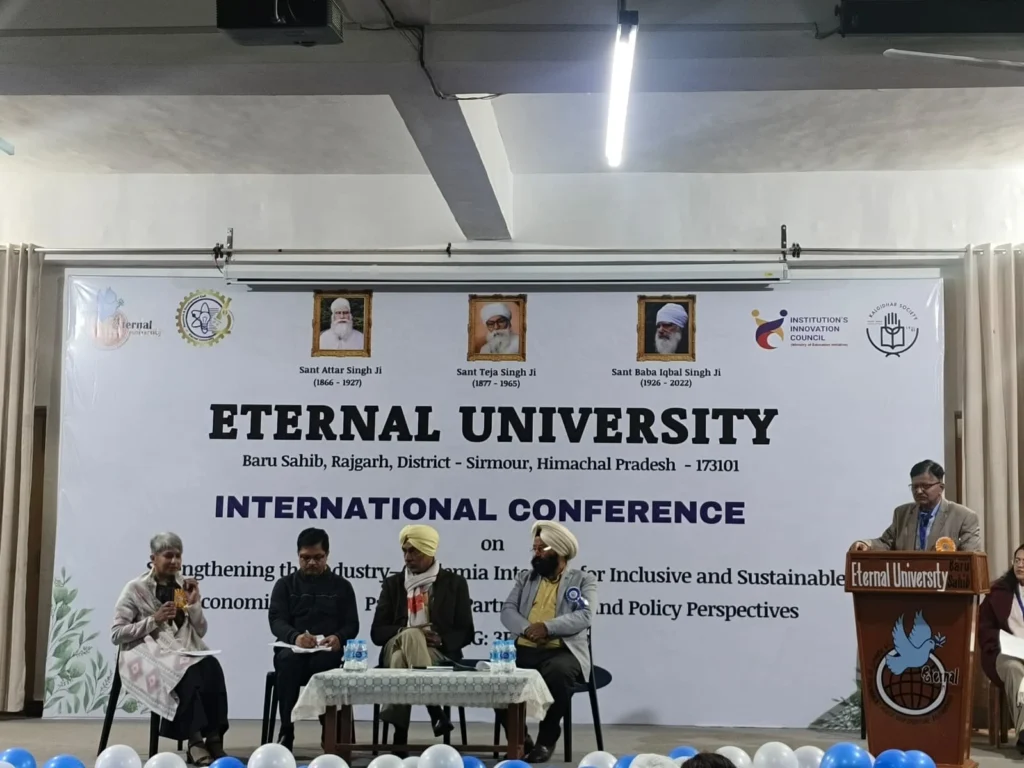
If the conference was a river of ideas, the Fireside Chat on Day Two was its clear, reflective pool. Moderated by Prof. S. C. Ghosh, the session brought together thinkers like Saroj Mahapatra, Shreelata Krishnan, Ashish Mehta, and Malwinder Singh Malhi. The intimate dialogue moved seamlessly between policy realities, structural gaps, and on-ground innovation, offering participants a rare window into the “why” behind the “what.”
The plenary sessions that followed added more layers—green skills for Viksit Bharat, evidence-based academic strategies, research integrity, energy storage technologies, and the art of confidence as a catalyst for transformation. Voices such as Prof. Lakhwinder Gill, Dr. Debdeep De, Prof. Gurmeet Singh, Prof. Debashish Malik, Adv. Ekant Agarwal, Suman Sensarma, Dr. Prabir Bandyopadhyay, Chaitali Moitra, and Dr. Lalita Ledwani enriched these deliberations.
As the academic intensity softened into twilight, the university’s stage came alive with performances that celebrated humanity, discipline, patriotism, and heritage. A thought-provoking skit reminded audiences of the fragility and strength of human relationships—especially the enduring respect due to elders. A mime on mobile misuse held a mirror to the digital age, while a patriotic dance stirred emotions across the hall.
The grand finale—a spirited Himachali nati—became a moving tribute to the state’s cultural richness, with each district represented through costume, rhythm, and grace. It was a moment where academia met art, and intellect met emotion.
Vision for Future – VC’s Reflection
Prof. (Dr.) Neelam Kaur encapsulated the essence of the event in her closing message:
“This conference reflects Eternal University’s conviction that meaningful collaboration between industry, academia, and policymakers is the cornerstone of national progress. Our mission is to nurture graduates who think critically, innovate responsibly, and serve society with integrity. These conversations will guide our collective journey toward a more inclusive and sustainable future.”
In the final moments of the conference, as the mountains stood in silent witness, one truth became clear: Eternal University had not just hosted an event—it had ignited a movement. A movement towards dialogue-driven change, towards visionary partnerships, and towards an education system that prepares students not only for jobs but for nation-building.
At Baru Sahib, where tranquillity meets tenacity, the future of industry–academia synergy has found a new horizon.