
Training on CBRN Disasters and Industrial Accident Preparedness Begins at Nauni University
2 min read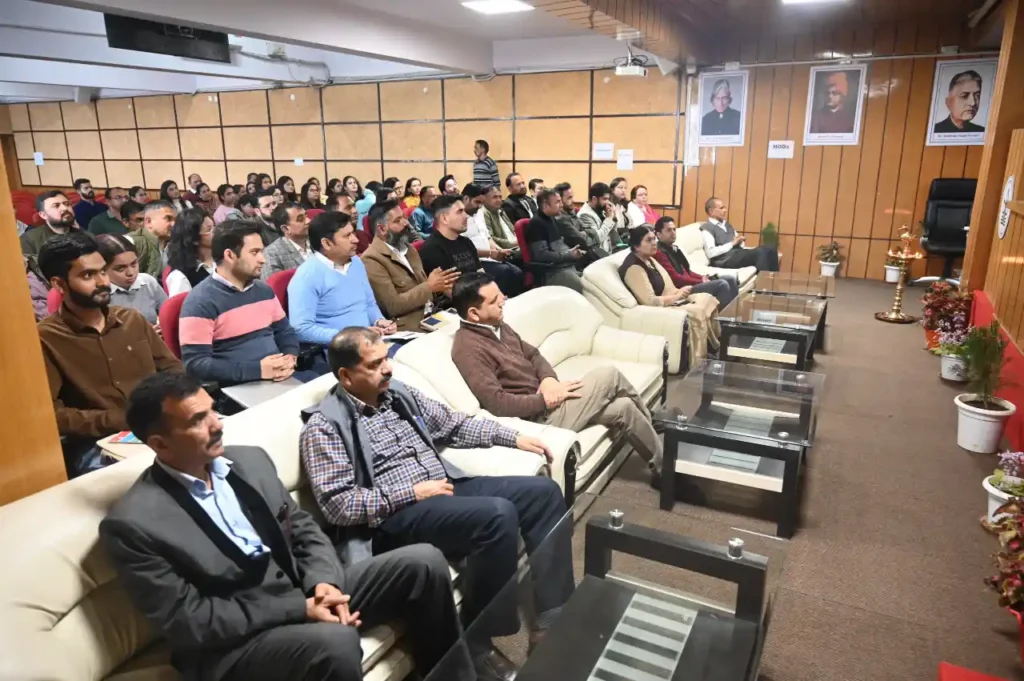
March 5, 2026
A three-day training programme on Chemical, Biological, Radiological and Nuclear (CBRN) Disasters and Industrial Accident Preparedness and Risk Management commenced today at Dr YS Parmar University of Horticulture and Forestry, Nauni. The training is being organized by the Department of Environmental Science of the university in collaboration with the District Disaster Management Authority (DDMA), Solan.
The objective of the training is to strengthen institutional preparedness and enhance inter-sectoral coordination for effective accident preparedness and risk mitigation. The programme has brought together policymakers and subject experts who will train representatives from various line departments.
Addressing the participants, Manmohan Sharma, Deputy Commissioner Solan-cum-Chairman, DDMA said that the training aims to enhance the basic preparedness of officials across different departments. He noted that with increasing development, certain activities have also led to a rise in the frequency and complexity of disasters. Emphasizing the changing approach to disaster management, he said that the focus has gradually shifted from disaster relief to disaster mitigation and prevention.
Citing examples from past disasters and the lessons learnt from them, he said that the District Disaster Management Plan is regularly updated to incorporate new learnings and emerging challenges. Referring to international preparedness measures, he highlighted how countries like Singapore have built bunkers in residential areas to safeguard citizens in the event of nuclear or chemical disasters.
Rahul Jain, Additional Deputy Commissioner-cum-Chief Executive Officer of DDMA, said that although CBRN disasters have not occurred, the authority is continuously strengthening its preparedness and response mechanisms. He noted that Solan district has a significant industrial belt, making it important to enhance the capacity of departments to effectively respond to potential industrial accidents and CBRN emergencies.
Dr C. L. Thakur, Dean, College of Forestry, emphasized the importance of capacity building in disaster management. He said that such training programmes enhance the ability of institutions to respond effectively during emergencies. He said that involving multiple departments would help participants understand both their individual and collective roles during disaster situations, thereby reducing risks and improving coordinated response.
Earlier, Dr S. K. Bhardwaj, Head, Department of Environmental Science, informed that the department had recently organized a workshop where experts from different fields deliberated on strengthening mitigation and preparedness measures across sectors to deal with future disasters. He added that the recommendations from the workshop have been incorporated into the present training programme to further improve preparedness among participants.
During the technical sessions on the first day, Rahul Jain presented an overview of CBRN disasters in Himachal Pradesh, while Dr Pratima Vaidya delivered a lecture on environmental monitoring and post-incident management in CBRN disasters. Retired IAS officer D. D. Sharma addressed the participants on the Incident Command System, detection, monitoring and sampling procedures, as well as the use of personal protective equipment (PPE), including safety protocols, donning and doffing procedures. Dr Ravindra Khaiwal from PGIMER Chandigarh delivered a presentation on medical first response and decontamination strategies in CBRN disasters, along with industrial accident preparedness.