
State Government steers Himachal Pradesh towards ‘Blue Prosperity’ Under Vyavastha Parivartan
2 min read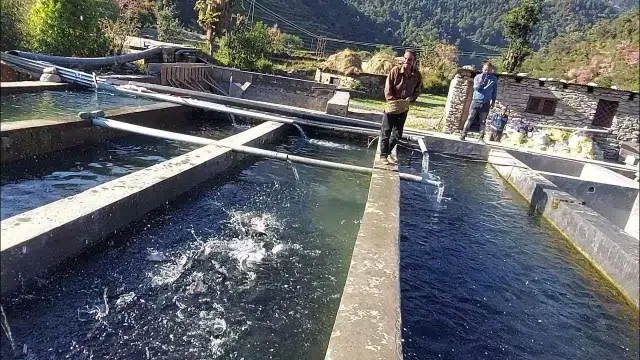
SHIMLA 10 January, 2026
For decades, Himachal Pradesh has been known as the ‘fruit bowl’ of the country, but as of today, it is charting a new course toward becoming a hub of ‘blue prosperity’.
The present state government took office with a solemn promise of ‘Vyavastha Parivartan’, a total transformation of the system and there is no better testament to this shift than the roaring success of the ‘Mukhya Mantri Carp Matsya Palan Yojana’ (MMCMPY).
When our Government took over three years before we realized that our rural youth were looking for more than just traditional employment, they were seeking dignity, innovation and ‘self-reliance’ within their own villages. This inspired to overhaul the fisheries sector, moving away from stagnant policies toward a more dynamic, incentive-based model.
By launching the MMCMPY in the 2024-25 , the state government didn’t just introduce a scheme, but took measures to transform the rural economy.
The results of this systemic change are already visible in the numbers.
The state’s total fish production has surged from 17,000 metric tonnes in 2022-23 to a projected 19,000 metric tonnes this year. But more importantly, the growth in state reservoirs like Gobind Sagar, Pong Dam, and Kol Dam is a proof that modern management and community involvement are working together to cater employment opportunities to the people near to their villages.
The scheme is currently being implemented in eight districts of the State, namely Bilaspur, Mandi, Una, Hamirpur, Kangra, Sirmaur and Chamba, covering a wide geographical area and ensuring balanced regional development in the fisheries sector.
Chief Minister’s vision of Vyavastha Parivartan is about making the government a partner in the farmer’s journey towards self reliance, not a hurdle. To facilitate this, the government has set the unit cost for carp farming at Rs. 12.40 lakh per hectare and took the unprecedented step of providing an 80 percent subsidy. This ensures that the financial burden on the youth and small farmers is minimized, allowing them to focus on production rather than debt.
Whether it is a large one hectare pond or a small 500 square metre unit for a marginal farmer, the government support is inclusive and unwavering.