

National Horticulture Board Team Visits RHRTS Dhaulakuan for Nursery Accreditation
2 min read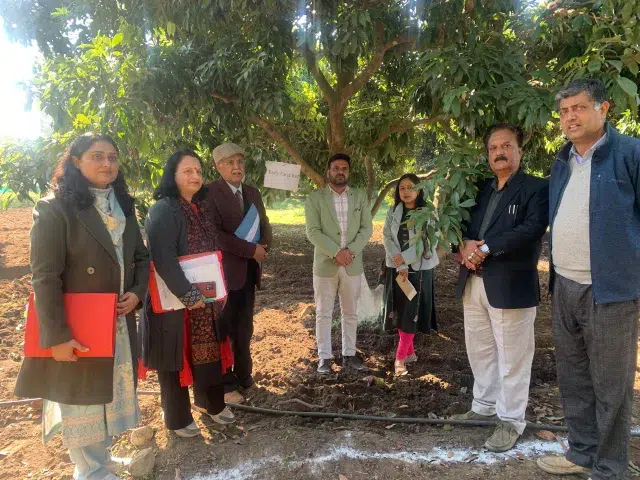
December 11, 2025
A team from the National Horticulture Board (NHB) visited the Regional Horticultural Research and Training Station (RHRTS), Dhaulakuan of Dr YS Parmar University of Horticulture and Forestry, Nauni for nursery inspection and accreditation.
The visiting team was chaired by Dr Y. C. Gupta, Consultant-cum-Chairman, and included Dr S. K. Chaurasia, Deputy Director, NHB Shimla; Dr Raj Kumar, Deputy Director Agriculture, Nahan; Dr Shiwali Dhiman, Subject Matter Specialist along with other representatives from NHB.
Dr Priyanka Thakur, Associate Director, RHRTS Dhaulakuan, along with Dr Shilpa, Assistant Professor (Fruit Science), took the team around the nursery units and the mother blocks of major fruit crops including Mango, Litchi, Guava, Citrus, Fig, Sapota, Pomegranate, Ber, Phalsa, Karonda, Loquat, and Jamun.
The research station currently has a total of 5.66 hectares under nursery production and established mother blocks. This includes 10,000 sq. m of nursery production area, polyhouses, working sheds, and a dedicated litchi mother block. Additionally, around 40,066 sq. m is under mother blocks of Kinnow, Mango, Guava, Citrus, Dragon fruit, Fig, Phalsa, Karonda, Aonla, Sapota, and Pomegranate.
Over the past decade, RHRTS Dhaulakuan has supplied lakhs of certified nursery plants to farmers within Himachal Pradesh and neighbouring states. The station specializes in the production of premium-quality planting material using both in-soil and polybag production technologies. A total of 23,102 nursery plants of various crops are being produced for the year 2025–26, which will be available to farmers throughout the year. Farmers can directly transplant the plants to the field after removing the polybags.
The NHB team also reviewed ongoing research activities at the station and appreciated the dedicated and systematic efforts of the Dhaulakuan research team.
RHRTS Dhaulakuan maintains rich varietal diversity, including 23 varieties of Citrus, 15 varieties of Mango, 5 varieties of Litchi, along with several varieties of Guava, Fig, Pomegranate, Jamun, and Sapota.