
When Support Meets Aspiration: Workers’ Children Step Into Brighter Future
2 min read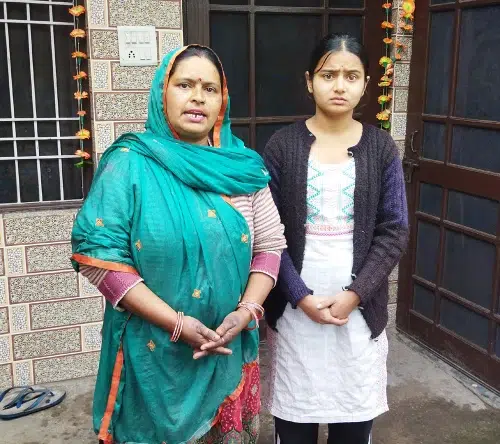
Dharamshala, April 10: For many children of construction workers in Himachal Pradesh, education once seemed like a distant dream—often interrupted by financial hardship and family responsibilities. Today, that story is steadily changing.
Under the leadership of Chief Minister **Sukhvinder Singh Sukhu**, welfare initiatives are helping bridge this gap, ensuring that children from labourer families not only stay in school but also aspire for higher education—even up to PhD level.
At the heart of this transformation is the Himachal Pradesh Building and Other Construction Workers Welfare Board, which is providing structured financial support through schemes like the Bal Shramik Vidya Yojana and education assistance programmes. The support ranges from ₹8,400 for early schooling to ₹1.2 lakh for higher studies.
In Kangra district alone, over the past three years, 1,927 children of workers have received financial assistance amounting to ₹3.49 crore, enabling them to continue their education without interruption.
Behind these numbers are stories of quiet resilience. Meenakshi Devi from Mataur, Rajni Devi from Nagrota, and Anoop Rani from Thural are among many who have seen their children’s futures change course. Anoop Rani received ₹84,000 for her two sons—one pursuing B.Pharmacy and the other D.Pharmacy. Meenakshi Devi’s daughters are now studying at the graduate level with ₹72,000 in support, while Rajni Devi’s children are pursuing higher education in science and graduation streams.
For these families, the support has been more than financial—it has been transformational. “Without this assistance, our children could not have continued their studies,” they say, reflecting a sentiment shared across many such households.
Labour Welfare Officer Lokesh explained that beneficiaries include workers engaged in construction and related trades—such as masons, electricians, plumbers, carpenters, welders, and helpers—ensuring that even the most vulnerable sections are covered.
Chairman of the Welfare Board, Nardev Kanwar, emphasized that the government’s vision is to ensure that no talented child is left behind due to lack of resources. “These schemes are not just about assistance—they are about dignity, opportunity, and building a stronger future,” he said.
As these initiatives continue to reach more families, they are quietly reshaping aspirations across the state—turning classrooms into possibilities and education into a pathway out of hardship.