
MukhautAsur: When Creative Ambition Outruns Theatrical Restraint
Shimla, Oct 14 Ritanjali Hastir
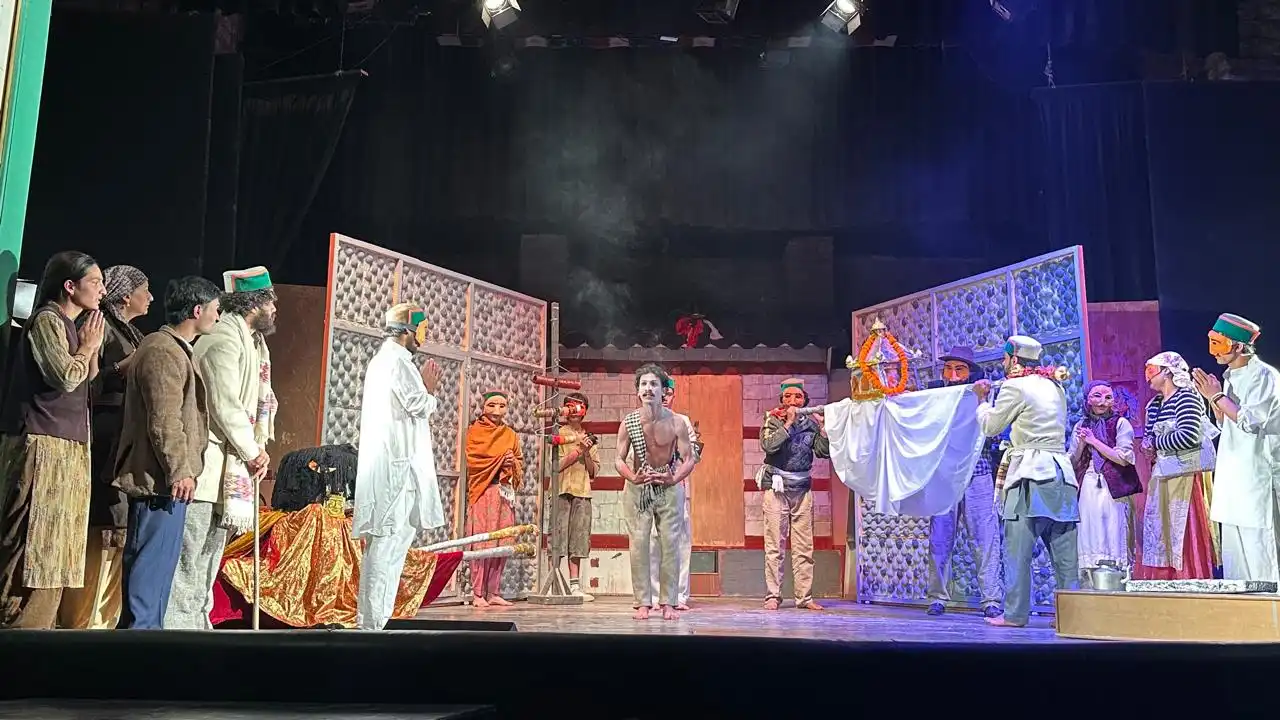
Staged at Gaiety Theatre, Shimla, MukhautAsur, adapted and directed by Chris Bharti and based on Sr Harnot’s novel Hidimbh, set out to bring alive a Pahari narrative rooted in culture, courage and the spirit of the mountains. The production had moments of genuine theatrical strength, but its creative ambition was often undermined by excessive length, uneven pacing and directorial choices that invited questions about artistic restraint.
Running for nearly 3 hours and 45 minutes, the production demanded considerable patience from the audience. A tighter edit could arguably have brought it closer to two hours without compromising the core narrative. Repeated fade-outs interrupted the flow, diluted the dramatic momentum and added significantly to the running time. Several sequences could have been suggested through lighting, sound, dialogue or symbolic staging rather than presented through extended visual enactments. In theatre, what is left to the audience’s imagination can often be more powerful than what is explicitly shown.
The most troubling directorial choice was the visual depiction of sexual violence. Its explicitness raised questions about the purpose and necessity of such staging, particularly in a performance attended by children.
https://youtube.com/shorts/YZ6mqYmRaTU?si=rrcK9eRbVceu2e8v
The invitation carried no visible age advisory, making the absence of guidance for parents and younger viewers a serious concern. Such a sensitive subject demands careful handling, not merely for its dramatic impact but also for the age and composition of the audience. The concern becomes even more significant when a member of the cast is reportedly a Class XII student. The issue is not whether theatre should confront difficult realities, but whether the treatment serves the story and does so with appropriate sensitivity.

The production’s portrayal of the gur also lacked the dramatic depth and impact that could have made this element more compelling. As the story progressed, the direction offered fewer surprises, and the narrative became increasingly predictable well before the climax. The final stretch consequently lost some of the tension that a stronger build-up might have sustained.
Yet MukhautAsur was not without its memorable moments. Tanu deserves particular appreciation for her acting, while Lokesh and Prem Kapoor also delivered commendable performances. Their contributions brought energy and conviction to the stage and helped sustain audience engagement despite the uneven pace. Others actors too did a wonderful job and deserve appreciation for keeping up.
Another question concerns the adaptation itself. According to a theatre enthusiast who shared this assessment, only around 30–40 per cent of the original story was retained. This estimate could not be independently verified, but it raises a legitimate question about the balance between adaptation and reinvention. Creative liberty is central to theatre, and a stage production need not reproduce a novel word for word. However, when an adaptation departs substantially from its source, the changes must strengthen the central themes rather than leave audiences wondering whether the original work’s essence has been diluted.
Ultimately, MukhautAsur was an ambitious theatrical effort with capable performances and flashes of promise. But ambition alone cannot compensate for a lack of editorial discipline. A shorter runtime, fewer unnecessary transitions, more suggestive staging of sensitive material and a clearer connection to the source narrative could have made the production more coherent and impactful.
Chris Bharti’s creative vision was evident, but greater restraint might have served it better. MukhautAsur had the ingredients of a compelling Pahari musical; with tighter direction and a more considered approach to its sensitive scenes, it could have connected more deeply with its audience.
Samagra Sikhsha