
18,925 Anganwadi centres catering to the nutritional needs of children

Shimla, 02nd November, 2025
Balanced and nutritious diet is a critical component in ensuring physical and mental well-being of children. Keeping this in mind, the government was laying special emphasis on fulfilling the nutritional needs of children by providing healthy and balanced nutrition necessary for their ideal growth.
With this in mind, the government was promoting nutritional health to build a prosperous society. In Himachal, 18,925 Anganwadi Centres are catering to the nutritional as well as early education needs of children. Every month, growth of children up to six years of age is being monitored on various physical and mental health parameters. During the current fiscal, Rs. 113 crore has already been spent from the state exchequer under the Anganwadi Services Scheme. In addition, Rs. 1516.09 lakh has been spent under the Special Nutrition Programme.
To ensure both quality early education and child care, the government has declared all Anganwadi Centres as “Anganwadi Co-Schools”, so that the holistic development of children could be ensured. The step would help build a strong foundation for their early learning. A state-level joint committee has also been formed under the chairmanship of the secretary education to implement the guidelines issued by the Ministry of Women and Child Development and the Ministry of Education for co-locating Anganwadi Centres and schools.
Out of the 1030 approved “Saksham Anganwadi Centres” in the state, 100 have been sanctioned for Chamba district. The process of upgrading Anganwadi Centres is ongoing. All District Programme Officers (DPOs), Child Development Project Officers (CDPOs), and Supervisors have been trained as State-Level Master Trainers. These Master Trainers will now train all Anganwadi Workers, and training materials are being printed for this purpose.
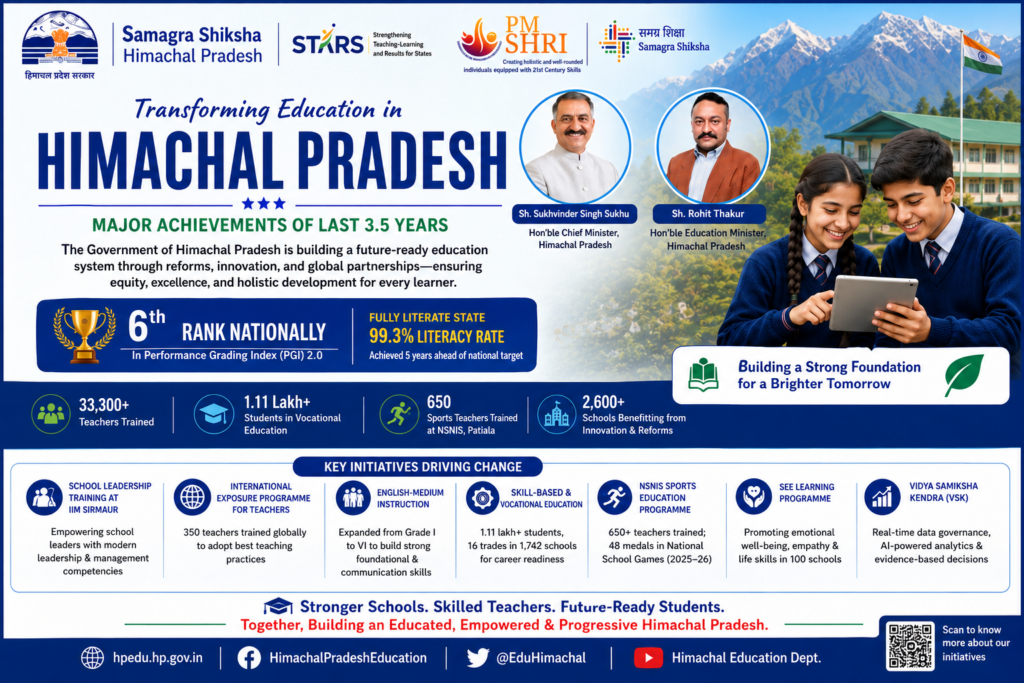
Chief Minister Thakur Sukhvinder Singh Sukhu has also started the Mukhyamantri Bal Poshan Aahar Yojna to provide nutritious meal to students of all government schools. Under this scheme, nutritious meals are being provided to 5.34 students studying in 15,181 government schools across the state.
To further improve children’s nutrition, the “Kitchen Garden” initiative has been successfully implemented in 14,464 schools. With the help of mid-day meal workers, school management committees, teachers and students, kitchen gardens have been developed where seasonal vegetables are grown. In schools with limited space, vegetables and herbs are grown in large containers and pots. The vegetables harvested from these gardens are used in mid-day meals, ensuring fresh and healthy food for children. This initiative also helps students learn the importance of natural farming and healthy eating habits.
Samagra Sikhsha